01 / Floors
Floor stripping and waxing
Worn finish removed, fresh coats laid down.
View details
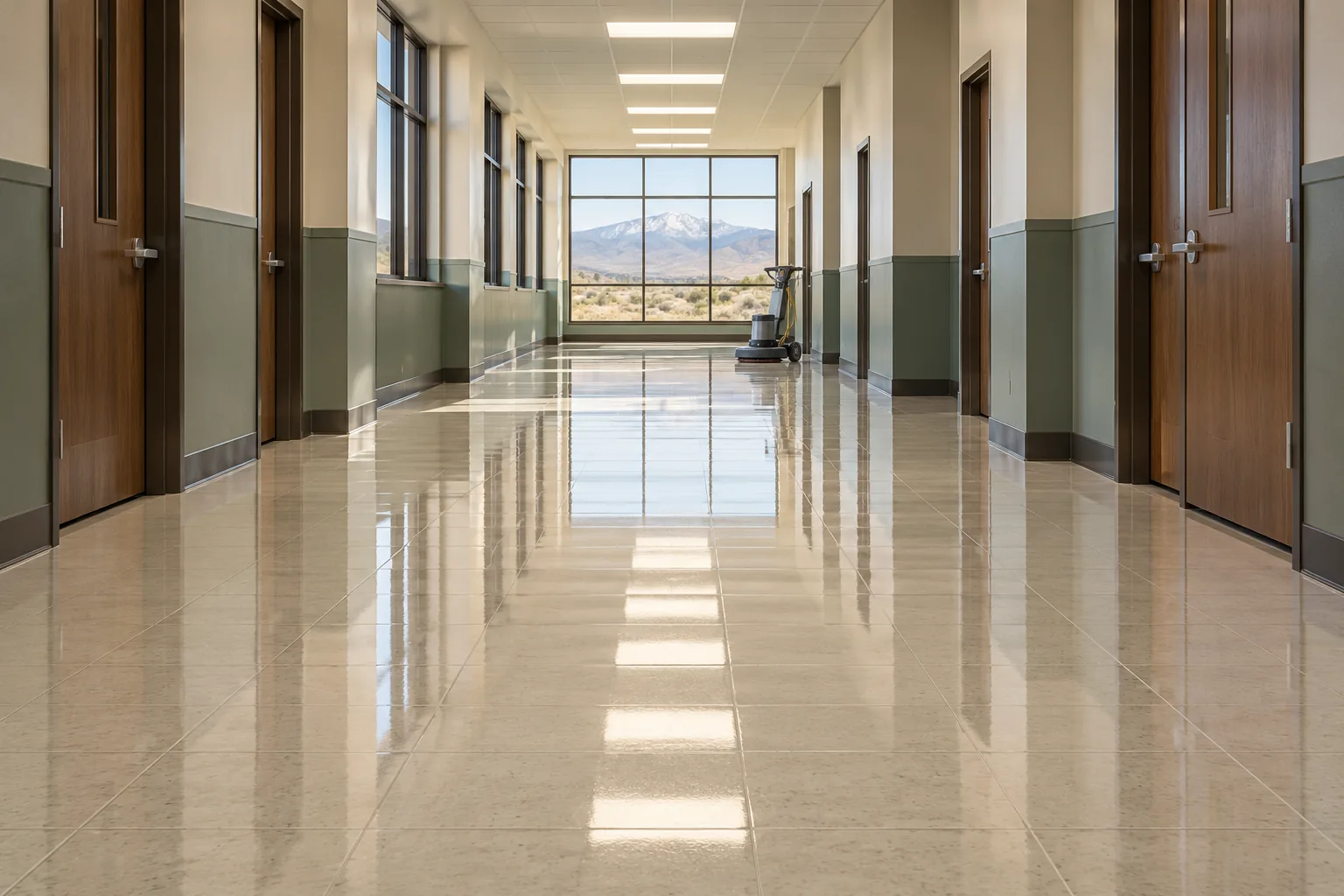
Guide
Not every dull floor needs a full strip. Here’s how to tell what yours is asking for, and what each fix involves.
Walk the floor in good light and compare the busiest lanes with the corners and the space under furniture. The corners show you what the finish looked like when it was new. The lanes show you how much wear it’s taken since.
If the difference is mostly shine, the finish is still there and just needs care. If the lanes look gray, patchy or worn down to the tile while the edges have turned yellow and thick, the finish itself is the problem.
A burnish is a high-speed polish of the finish already on the floor. It brings back gloss on a floor that’s dull but intact, and it’s quick enough to run on a regular cycle between bigger jobs.
Burnishing can’t fix finish that’s worn through or discolored, though. Polishing a yellowed floor just gives you a shinier yellow floor.
In between a burnish and a full strip sits the scrub and recoat. The crew deep-scrubs the top layer of finish to remove ground-in dirt, then lays one or two fresh coats on top.
It’s a good fit for a floor that’s worn in the lanes but not yet discolored or built up at the edges. It costs a floor less downtime than a strip and stretches the time until one is needed.
A full strip takes every layer of old finish down to bare floor, then starts over with fresh coats. It’s the answer when finish has yellowed, built up along walls and corners, or trapped scratches and dirt that no scrub can reach.
Most busy commercial floors need a strip once or twice a year. Lobbies, corridors and the paths to restrooms usually tell you first.
Services
01 / Floors
Worn finish removed, fresh coats laid down.
View details02 / Concrete
Tire marks and grime lifted from concrete.
View detailsA strip is a closed-floor job. The room is cleared, stripper goes down and loosens the old finish, the crew scrubs it off and recovers it, and the bare floor is rinsed and dried. Fresh finish then goes on in thin coats, each one drying before the next.
Furniture goes back only after the last coat has cured. That is why most strips run overnight or across a weekend, and why the schedule should name when each room closes and reopens.
Sealed and bare concrete in warehouses, shops and garages doesn’t take finish the way resilient tile does. It needs machine scrubbing with pads matched to the surface: gentler for sealed or polished concrete, more aggressive for bare slabs with ground-in grime.
If a concrete floor looks dull, gray or marked with tires, a scrub is usually the fix. If the sealer itself has worn away in the traffic lanes, mention it at the walkthrough so the plan accounts for it.
Carson City floors work hard in winter. Snowmelt, sand and de-icer ride in on every shoe and grind into the finish in the first few yards past the door. Windy stretches the rest of the year push fine dust inside, which does the same thing more slowly.
Good entry mats and regular dust mopping slow the wear. Planning the yearly strip for late spring, after the worst of the grit, and burnishing through the winter keeps the floor looking even.
Most busy commercial floors do well with a full strip once or twice a year, a scrub and recoat in between where lanes wear quickly, and regular burnishing to hold the gloss. Quieter floors can stretch much longer.
We look at your floors on the walkthrough, tell you which treatment each area needs now and suggest a rhythm from there. See our floor refinishing service for how the work is scheduled.
A few useful answers
Yes. Large floors are stripped in sections, so part of the building stays open while each section cures.
Long enough that the last coat is fully set before furniture and foot traffic return, which is why strips are booked overnight or over a weekend.
Burnishing polishes the finish on top, not the floor underneath. Done between strips, it extends how long the finish lasts.